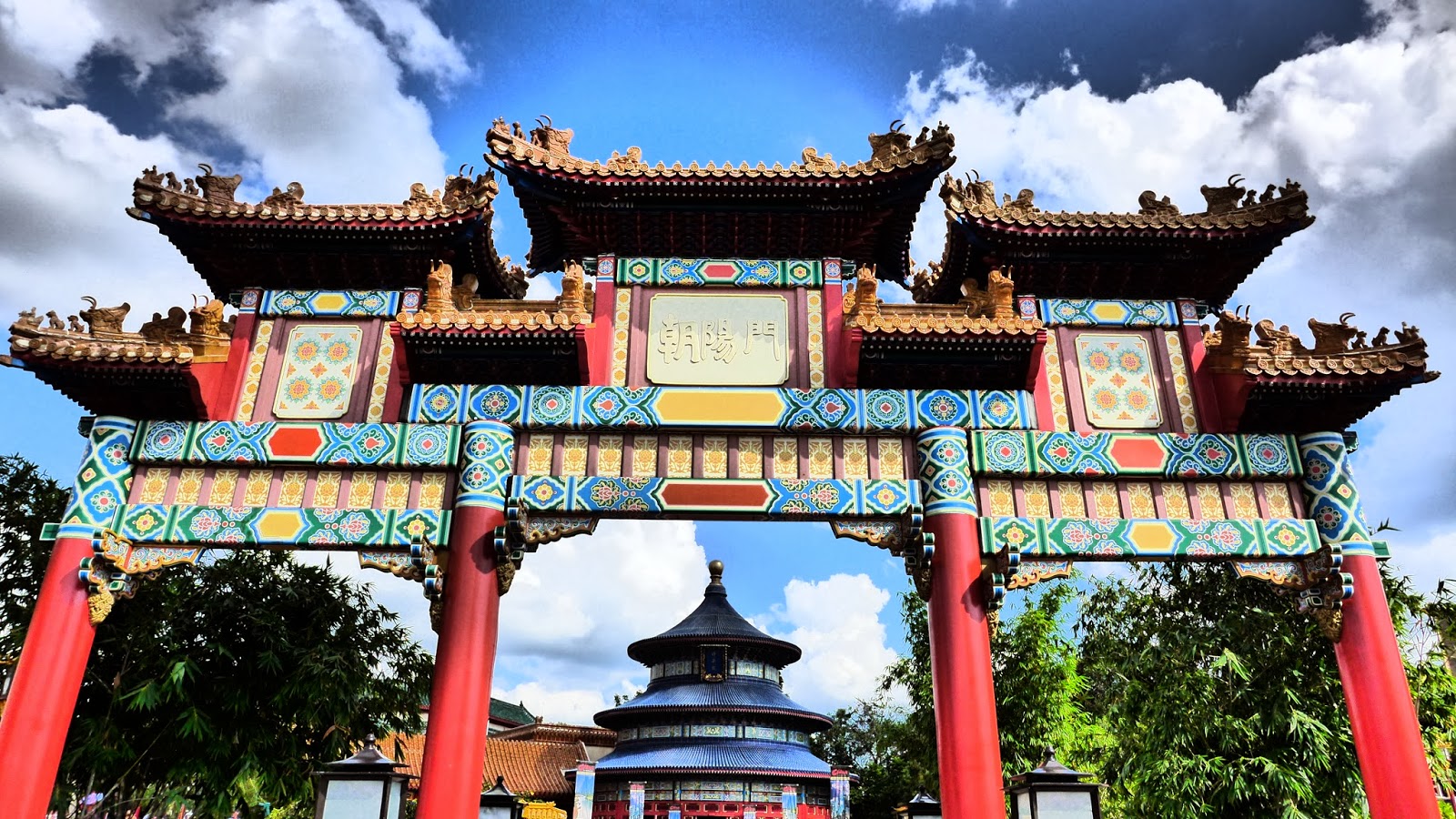
China as depicted by Disney World - it may be fake but at least my lungs are safe...
There’s been a lot of news coverage
recently of the terrible pollution problem being endured in a number of Chinese cities. On 6 December, the highest possible health warning for Shanghai was
issued, with pollution levels reaching 20 times what the UN deems safe for
humans to breathe in. Flights were cancelled, children were forced indoors and
visibility was reduced to mere metres.
To put a merry spin on this epic public
health crisis, CCTV, the state television network, has published a column
outlining five ‘unexpected gains’ brought by the smog. These include: smog has united
the public against a common enemy, it’s given the nation time to reflect on the
consequences of its economic boom and, my personal favourite, everyone’s sense
of humour is coming out as people turn to jokes and sarcasm to deflect from the
crisis. Western media outlets are finding the whole list a bit hilarious since
it seems somewhat absurd to think that health-ravishing haze is improving
Chinese people’s English-language skills (number five on the list).
Out of all the points though, for me, the
most interesting was number two: the suggestion that air pollution is a great
equalizer, poisoning the lungs of both the rich and the poor. The idea that
massive environmental catastrophes are egalitarian is one that I’ve encountered
numerous times, most notably in the work of esteemed sociologist, Ulrich Beck.
However despite this argument being quite widespread, it’s also incorrect.
In Beck’s renowned book, Risk Society, he defines
the current late modern age as one in which human and technological productivity
has led to the reduction of material need. However the growing productive forces
of modernisation have also unleashed new hazards and potential threats. The
threats that characterise late modernity are things such as radioactivity, toxins
and pollutants that evade human perception. They cause systematic,
geographically dispersed harm but are mainly invisible. So, for example, while
a volcanic eruption is a highly visible and localised event, radiation is
invisible and its effects far-reaching.
In agreement with the Chinese television
network, Beck also argues that late modern risks are egalitarian. As he pithily
surmises: “poverty is hierarchic, smog is democratic.” Smog clouds don’t
distinguish between rich lungs and poor lungs, they poison each equally. Beck
concedes that wealth and class do play a part in the distribution of risks. For
example, risks from radiation and toxic chemicals are connected to working in
industrial plants, work associated with the lower classes. However, ultimately,
the risks of late modernity are unavoidable irrespective of class due to their
invisibility and their wide reach.
Beck makes a good point that working in
certain industries will increase your exposure to risks and that these
occupations tend to be dominated by the lower social classes. However I think
Beck understates the ability of wealth to mitigate risk. Beck argues that, “in
the water supply all the social strata are connected to the same pipe.” But
what about all the rich people who can buy and import bottled water? Or all the
rich people who can move away from areas with toxins in the water or pollutants
in the air or encroaching sea levels, living instead in plush chalets on
idyllic mountain-sides? And while it’s true that smog poisons the rich and poor
equally, the rich can afford significantly better healthcare and thus the
consequences of the smog are reduced. Not only are risks not evenly distributed
but their consequences are not universally endured either.
I realise that the CCTV column is just a
light-hearted attempt to bring some optimism to a grave situation but by
describing environmental disasters as egalitarian, it absolves the originators
of risks of their responsibility. The late modern, Western world creates most
of the world’s pollution and yet it’s the poorer countries that are paying for
it. While America and Europe unthinkingly pumps CO2 into the air, Bangladesh
and Thailand are struggling to cope with ever-rising sea levels and
increasingly catastrophic natural disasters. Describing environmental
catastrophes as equalisers suggests that we all bear equal burden for resolving
the disaster but it’s the wealthy, polluting nations that are creating the
risks and therefore they should be the ones striving to nullify them.
